


We protect what makes your business vulnerable – from premises to business processes
Physical security today involves far more than just building protection.
Uncontrolled access, a lack of security zones or inadequate emergency plans can have a direct impact on IT systems, data and business operations. We help you establish physical security as an integral part of your security strategy – tailored to your risks, your infrastructure and your organisation.
Our approach: integral security
Physical security is only effective when combined with organisational and technical measures.
We take an integrated approach, combining physical security with information security, personal security, cyber and IT security, risk management, business continuity management and crisis management. This creates a consistent and effective security architecture across all areas.


Physical security assessment
Locations with inadequate security, unclear access rules or a lack of security zones often go unnoticed in day-to-day operations – until an incident occurs.
Using a structured physical security assessment, we carry out a comprehensive analysis of your sites, buildings and processes to identify specific vulnerabilities and risks.
- Site and area analysis
Assessment of buildings, sites and access points - Vulnerability analysis
Identification of security vulnerabilities in infrastructure and processes - Risk assessment
Assessment of threats and potential impacts - Review of security zones and access policies
Analysis of existing security measures and access rules - Benchmarking against best practices and regulatory requirements
- Review of control mechanisms (ICS) and their effectiveness
Security concept and architecture
Individual measures such as access controls or surveillance systems are only effective if they are part of a well-thought-out overall strategy.
We develop a comprehensive security strategy that takes into account physical risks as well as organisational and infrastructural aspects.
- Development of security and zoning concepts
Definition of protected areas and security levels - Perimeter and building security concepts
Structuring of site and building security - Access concepts
Including the regulation of access processes for persons, visitors and suppliers - Protection of critical areas
The protection of sensitive infrastructure such as data centres or production facilities - Integration of technical and organisational measures
Coordination of processes, systems and responsibilities - Definition of control and monitoring mechanisms

Facility and infrastructure security
Security concepts only deliver their full benefits when they are consistently implemented and integrated into existing infrastructures.
We support you in implementing physical security measures in a practical manner and embedding them seamlessly into your buildings, facilities and technical systems.
- Building and site security
Implementation of protective measures for sites, buildings and grounds - Technical security solutions
Design and integration of access control systems, surveillance systems and sensor technology - Integration into existing infrastructures
Coordination with building services, IT systems and operational processes - Support with implementation and roll-out
Support with planning, implementation and operation - Optimisation of existing security solutions
Further development and adaptation of existing measures - Ensuring sustainable and efficient operations
Emergency and evacuation plans
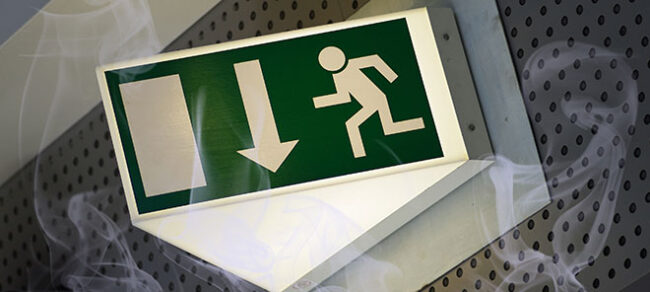
In an emergency, clear procedures, an effective alert system and trained staff play a key role in minimising damage.
We can help you develop emergency and evacuation plans that work reliably when the need arises and are tailored to your organisation.
- Development of emergency and evacuation plans
Definition of processes, responsibilities and measures - Alert and communication concepts
Ensuring a swift and clear flow of information in the event of an incident - Evacuation planning
Planning of escape routes, assembly points and evacuation processes - Integration into crisis management and BCM
Harmonisation with existing emergency and recovery procedures - Carrying out exercises and tests
Review of effectiveness and continuous improvement